Winter 2025 Newsletter: A Look Back at the Decade's Halfway Point, Social Security, and Charitable Giving
We hope everyone had a happy and healthy holiday season. Now it's time to get 2025 off to a fantastic start and pursue your goals.
Welcome to the latest edition of our Swan Quarterly Newsletter! Each quarter, we're committed to bringing you timely topics of recent conversations we've been having with clients and actionable strategies to help you navigate the ever-changing financial landscape. In this edition, we're covering a look back at the last half decade from a market perspective, putting your mind at ease when it comes to Social Security, how to maximize your charitable contributions, and an important non-financial deadline ahead for us Minnesotans on May 7th this year.
As always, our goal is to provide you with the tools and knowledge to make confident, informed decisions. We're here to help you stay ahead, no matter what the markets or life may bring. Thank you for allowing us to be part of your financial journey. Let's dive into this quarter's updates and opportunities!
The Roaring 2020s? A Reflection on the Decade's Halfway Point
We're already halfway through the 2020s. Time flies, doesn't it? The past five years have been nothing short of extraordinary in the financial markets. Looking back, it's remarkable how much has transpired since the start of a global pandemic that reshaped economies, industries, and investment strategies. Each year has brought its own twists and turns, with big market swings, both up and down, becoming the norm. For investors, volatility often brings to mind losses, but it can work in both directions. The first half of this decade has delivered impressive returns, even while enduring two bear markets. Market cycles in the 2020s seem to be accelerating, with recessions, recoveries, and asset-class rotations occurring more rapidly than ever before. While predicting the future remains as elusive as ever, one thing remains clear: diversification is the enduring cornerstone of a sound financial plan.
Diversification Can Feel Disappointing
It was another phenomenal year for the S&P 500, which returned 23.31%. After posting another outsized return, it's easy to get swept up in the success of dominant asset classes, especially during years like 2023 and 2024, which saw large U.S. companies, particularly those in the S&P 500, leading the charge. The allure of chasing top-performing sectors is tempting, but history tells us that no single asset class stays on top forever.
Diversification is about more than just investing in the S&P 500. A truly diversified portfolio goes beyond large-cap U.S. stocks, incorporating small- and mid-cap stocks, international equities, bonds, and alternative investments. This broader approach minimizes risk and provides stability, even during turbulent times.
That said, diversification can sometimes feel underwhelming and boring. In years where a single index or sector outperforms, a diversified portfolio may seem like it's lagging behind. But diversification may not always win in the short term, it can produce more consistent and favorable outcomes in the long run.
Here's a look at how a diversified portfolio (24% S&P 500, 24% Russell Mid Cap, 5% MSCI EAFE, 2% Russell 2000, 5% FTSE Emerging Stock, 20% Bloomberg U.S. Aggregate Bond, and 20% Bloomberg U.S. Corporate High Yield Index) has compared to the S&P 500 alone over the last 20-plus years: 2000-2002, S&P 500 -40.1% vs. diversified portfolio -15.7%; 2003-2007, +82.9% vs. +91.5%; 2008, -37.0% vs. -28.5%; 2009-2019, +351.0% vs. +237.2%; Q1 2020, -30.4% vs. -24.2%; Q2 2020-2021, +119.0% vs. +69.8%; 2022, -18.1% vs. -15.3%; 2023, +26.3% vs. +15.9%. Total return over the full period: +390.8% for the S&P 500 versus +391.4% for the diversified portfolio, meaning $100,000 invested would have grown to $490,770 versus $491,430. Diversification can work even when it feels like it's losing.
(Source: Morningstar, as of 12/31/23. Past performance does not guarantee or indicate future results. Index performance is for illustrative purposes only; you cannot invest directly in an index. Diversification does not guarantee a profit or protect against a loss in a declining market.)
Will Social Security Benefits Run Out?
In the past few months, we came across several client conversations where people voiced concern over the depletion of Social Security and how their paychecks from Uncle Sam may be affected. The program faces challenges like an aging population, fewer workers entering the labor force, and rising life expectancy. Despite the criticism of the program's solvency, the Social Security Trust Fund is highly unlikely to run out in our lifetimes.
Social Security is primarily funded through payroll taxes: employers and employees each contribute 6.2% of wages up to the annual wage base of $160,200, while self-employed individuals pay 12.4%. The Trust Fund also earns interest by investing in U.S. Treasury securities. Even if the Trust Fund is depleted, ongoing payroll taxes are projected to cover approximately 77% of scheduled benefits.
Since its inception in 1935, Social Security has evolved through numerous amendments to address economic and demographic changes, and lawmakers have several measures available if adjustments are needed: increasing payroll tax rates from the current 6.2% and 12.4%; raising or eliminating the $160,200 taxable wage base; adjusting benefits for the wealthiest recipients; increasing the full retirement age as life expectancies rise; and diversifying funding sources beyond payroll taxes alone.
Over 67 million Americans, including retirees, disabled workers, and survivors, depend on Social Security for financial stability, so we view drastic cuts or elimination as highly unlikely regardless of the political environment.
A Win-Win for Our Philanthropic Clients
Did you know Minnesota residents are the third most charitable state in the country, helped along by our "Minnesota nice" moniker and Give to the Max Day, which falls on November 20th this year. Back in 1999, Minnesota was the first state to pass a state-level charitable donation tax deduction for non-itemizers. Give to the Max Day has been a roaring success, resulting in over $355 million raised for over 14,000 non-profits and schools over the 16 years of its existence. Simply incredible.
For our charitably inclined clients, there are two clear winners when it comes to planning charitable donations: Qualified Charitable Distributions and Donor Advised Funds.
QCDs are the best thing since sliced bread for many of our clients aged 73 and above. Once you hit that age, the government wants its Required Minimum Distribution, taxed as ordinary income on money you've enjoyed deferring taxes on for decades. But not to fear, your advisors are here: we can help turn part or all of your RMD (up to $100,000 a year) into a QCD, donated directly to a nonprofit of your choice. The distribution isn't included in your taxable income, meaning you avoid paying tax on it while satisfying all or part of your RMD.
For those under the RMD age of 73, Donor Advised Funds are a flexible, tax-efficient way to manage charitable giving. Contributions are irrevocable and let you claim an immediate tax deduction while supporting your favorite charities over time. You can donate cash, appreciated assets, or securities (which can help avoid capital gains taxes), and the funds grow tax-free. DAFs simplify recordkeeping, allow anonymous giving, and let you invest and distribute grants at your own pace.
Planning to Travel? REAL ID Enforcement Begins May 7, 2025
We're coming down to the wire with REAL ID in Minnesota. Minnesota has a mandatory deadline for REAL IDs on May 7th, 2025, though there's already legislation on the table to delay this requirement until 2027.
If the REAL ID requirement goes through on May 7th, 2025, you'll need to bring one of the following three options to the airport: a Minnesota REAL ID driver's license or identification card; a Minnesota Enhanced driver's license or identification card; or another federally-approved form of identification, including a U.S. passport or passport card, a foreign government-issued passport, a U.S. Citizenship and Immigration Services Employment Authorization Card (I-766), a permanent resident card, a border crossing card, a federally recognized tribal-issued photo ID, or a U.S. Department of Defense ID (including dependents).
If you go get your REAL ID at your local DMV, you'll need: one document proving identity, date of birth, and U.S. legal presence; your Social Security number; and two documents proving current Minnesota residency.
If You're Still Reading...
Taxes are around the corner: we'll be mailing out Form 1099 toward the end of January, so watch for it to pass along to your CPA. As a reminder, we offer in-house tax preparation services for efficiency!
If you're unsure how your portfolio will react to a sell-off this year, or how you're invested heading into 2025, don't hesitate to schedule a portfolio review with us.
We value your opinion and are constantly looking for ways to improve our services. Whether it's a suggestion, a concern, or something you loved, we'd greatly appreciate hearing from you!
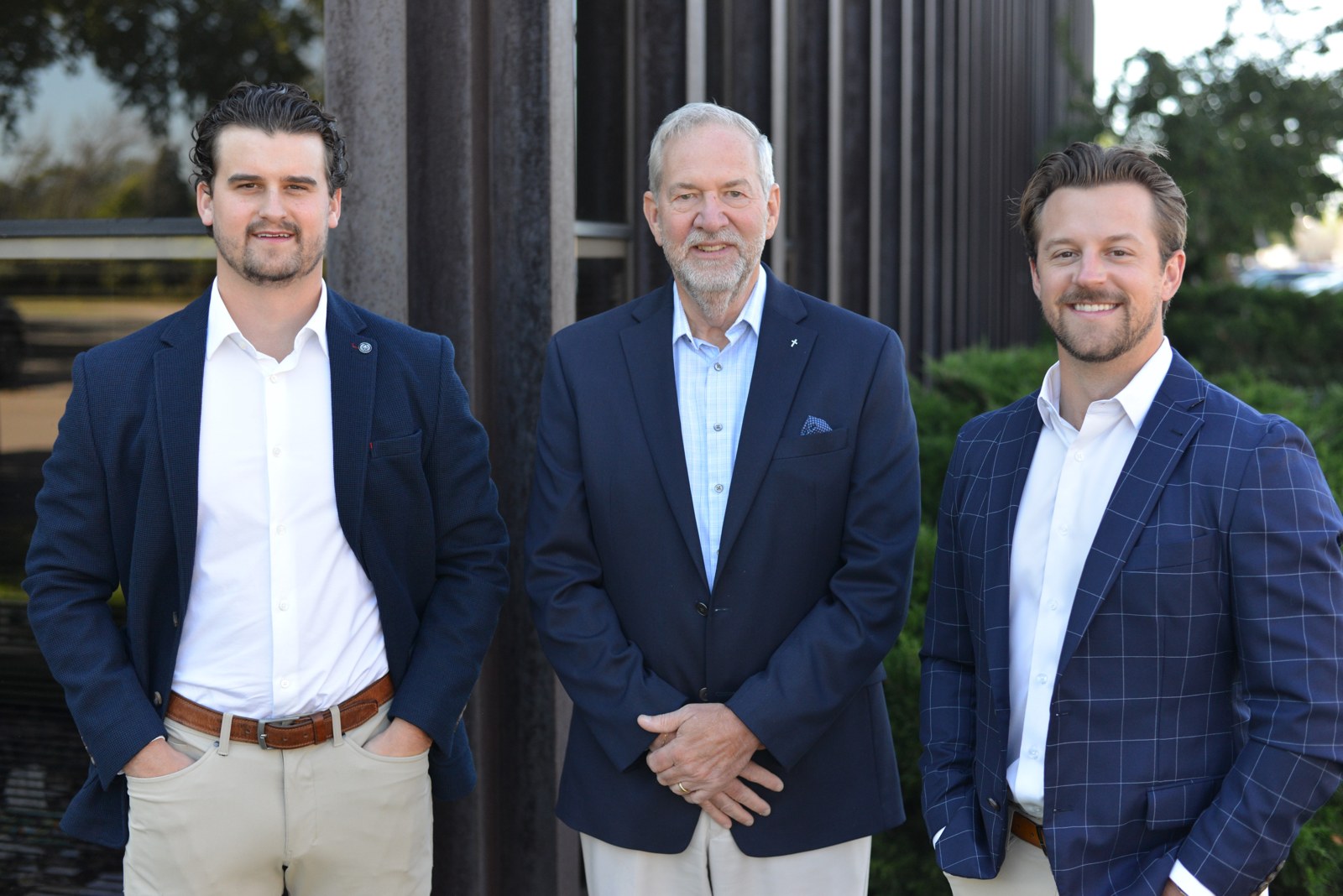
Mike Mahalich, Paul Klein, TJ Bruce
Book a consultation
Talk through your own situation with an advisor on a free 15 minute call.
Schedule a consultation